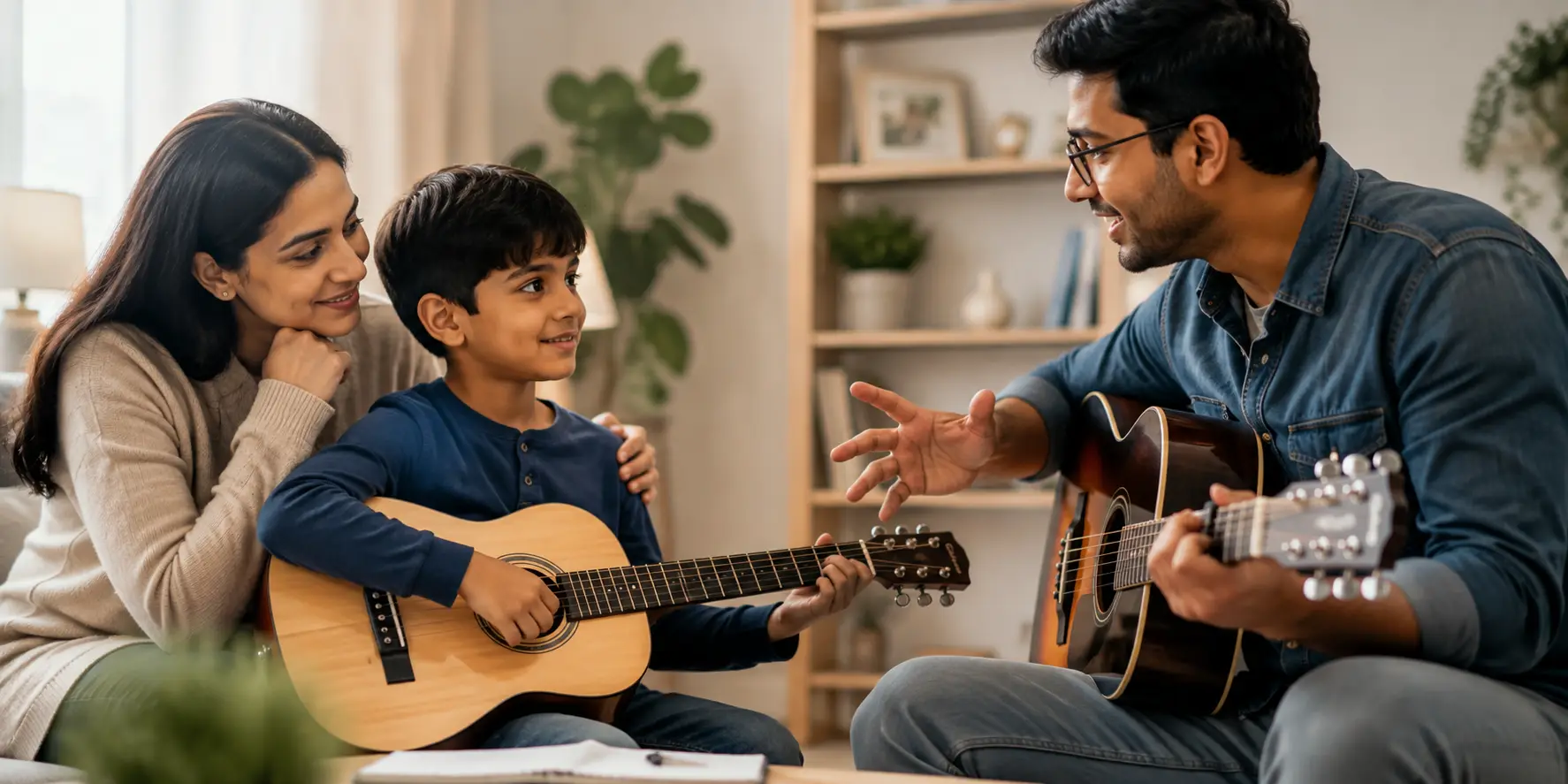
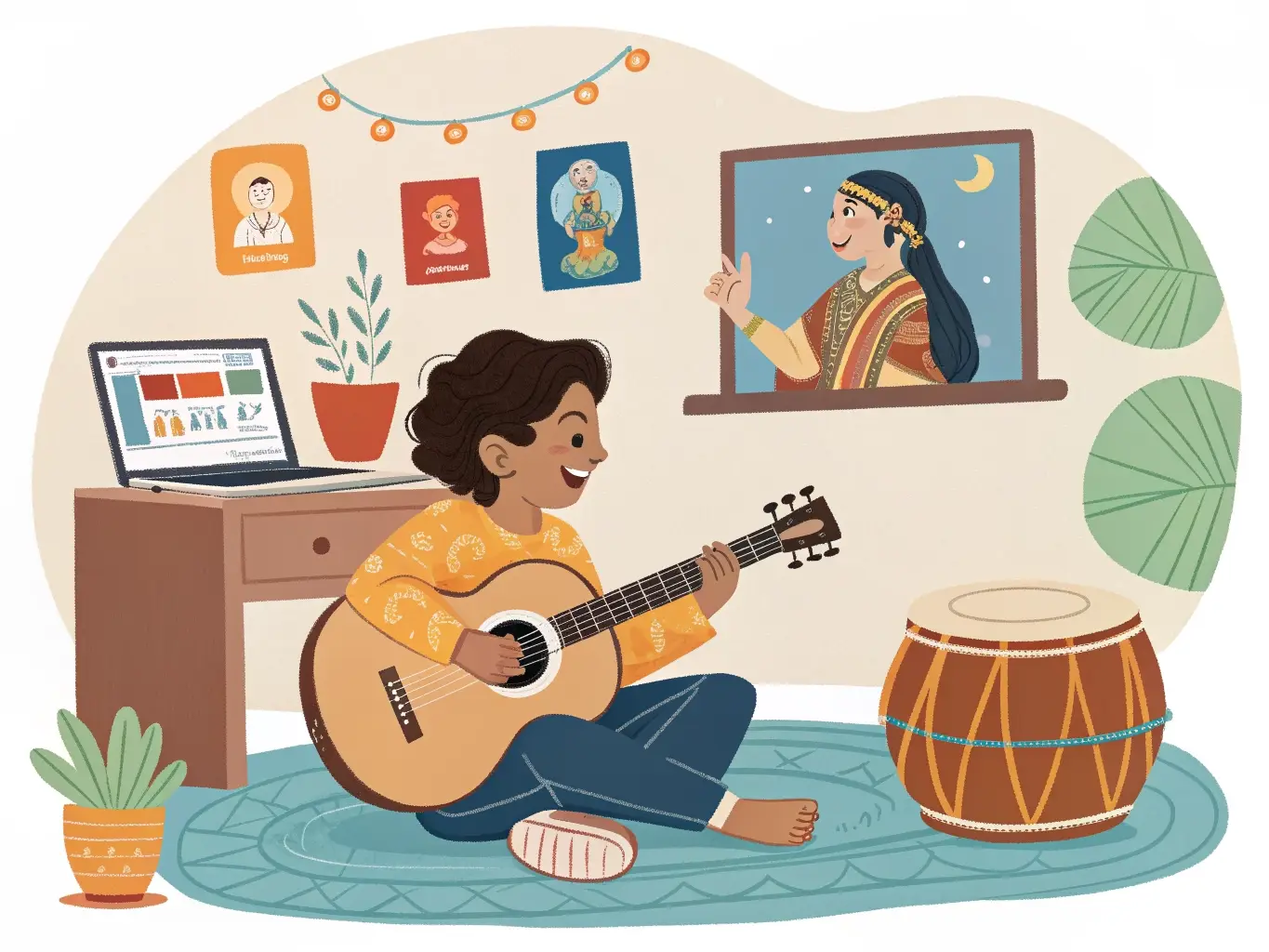
Online guitar lessons can help kids growing up outside India build a real, ongoing connection to Indian music and culture — not just through festival events a few times a year, but through a weekly habit that puts Bollywood melodies, film music, and Indian musical phrasing directly into their hands. The key is finding a teacher who treats that cultural connection as central to the curriculum, not an occasional bonus song.
If you’re raising a child in the US, you already know the quiet, ongoing effort it takes to keep them connected to India — not just once a year at Diwali, but as something woven into daily and weekly life. Guitar can be one of the more effective, and often overlooked, tools for that.
Why Music Is a Different Kind of Cultural Connection
Most efforts to keep kids connected to Indian culture abroad — language classes, festival events, family trips — happen in bursts. Music, when it’s a weekly lesson, is different: it’s a recurring habit, not an event. A child who spends 20 minutes a week learning to play “Kabira” or “Kesariya” isn’t just checking a cultural box — they’re internalizing the melody, the rhythm, the phrasing of Indian music in a way that sticks.
There’s also a quieter benefit: it gives kids something to be genuinely good at that connects to where their family is from, on their own terms, not because a parent is insisting on it. A teenager who can play a Bollywood song on guitar at a family gathering has a different relationship with that identity than one who’s just told to “appreciate” it.
How Online Lessons Actually Work Across US Time Zones
One of the most common hesitations parents have is logistics — will this actually fit into an already packed week? In practice, most online guitar teachers working with diaspora families structure lessons around US time zones directly, not Indian ones, since the teacher (even if based in India or Indian-origin) is scheduling around your child’s after-school hours.
A typical week looks like:
- One 30–45 minute live lesson, usually a weekday evening or weekend slot
- A short practice plan for the days in between (10–15 minutes, not a heavy homework load)
- Flexibility around exam weeks, school breaks, and travel to India
For families across the US, Canada, and Australia, this usually means evening or early-weekend slots work best — ask any teacher you’re considering how they handle time zone scheduling before you commit.
What to Expect in the First Month
The first month sets the tone for whether a child sticks with guitar long-term, so it’s worth knowing what “normal” looks like:
- Week 1–2: Basic hand position, first 2–3 chords, simple strumming pattern. This part can feel slow — that’s expected, not a sign something’s wrong.
- Week 3–4: First recognizable song fragment, usually a chorus rather than a full song. This is the moment most kids either get hooked or start losing interest — a good teacher will pick the song carefully for this reason.
- By end of month 1: A child who’s practiced consistently should be able to play a simple chorus (think “Kabira” or “Tum Hi Ho”) cleanly, even if slowly.
If your child hits week 3 and seems bored, it’s almost always a song-selection problem, not a talent problem — worth raising with the teacher directly rather than assuming guitar “isn’t for them.”
Balancing School, Activities, and Practice Time
Diaspora kids are often juggling more than their peers — school, sports, Hindi/Gujarati/Tamil/Telugu classes, temple or community commitments, plus regular homework. Guitar has to fit into that, not compete with it.
A few things that make it sustainable:
- Short, consistent practice beats long, occasional practice. 10 focused minutes daily is more effective than a single 90-minute weekend session.
- Attach practice to an existing routine — right after homework, or right before dinner — rather than treating it as one more thing to schedule separately.
- Let the lesson day flex around exams and travel, but protect the practice habit even during those weeks, even if it’s just 5 minutes.
Frequently Asked Questions
Is guitar a good way to keep my child connected to Indian culture if we live abroad?
Yes — because it’s a recurring weekly habit rather than an occasional event, it tends to build a deeper, more personal connection to Indian music than festival attendance alone, and it gives kids a skill they associate with that identity on their own terms.
What age should I start my child on guitar if we want them to learn Bollywood songs?
7–8 years old is a practical starting point for a standard guitar, though a motivated 5–6 year old can start on a smaller travel or half-size guitar. Interest and attention span matter more than exact age.
How do online lessons handle time zones for US, Canada, and Australia families?
Most teachers working with diaspora families schedule around the student’s local evening or weekend hours rather than the teacher’s own time zone — confirm this directly before enrolling.
Will my child get bored learning only Western method-book songs?
Possibly — this is why it’s worth choosing a teacher who blends Bollywood, Indian film music, and Western technique from the start, rather than treating Indian songs as an occasional treat after “real” lessons.
How much should my child practice each week?
10–15 minutes a day, 5–6 days a week, is more effective for a beginner than one long weekend session. Consistency matters more than duration.
Musician Teacher was built specifically for kids and families living outside India who want guitar lessons that treat Bollywood and Indian music as central, not optional — taught personally, 1:1, by our Founder. Book a trial lesson to see how your child responds to their first song.